





You may remember mitochondria from high school biology as the “powerhouses of the cell.” That description was remarkably accurate, though scientists now know these tiny structures do much more than produce energy.
Found inside almost every cell in the human body, mitochondria convert nutrients from the food we eat and oxygen from the air we breathe into usable cellular energy. The National Institutes of Health estimates that mitochondria generate about 90 percent of the energy our cells need to function.
That energy keeps your heart beating, your brain working, your muscles moving, and your body repairing itself. It is also one reason mitochondrial health has become an increasingly interesting area of research in exercise, nutrition and healthy aging.
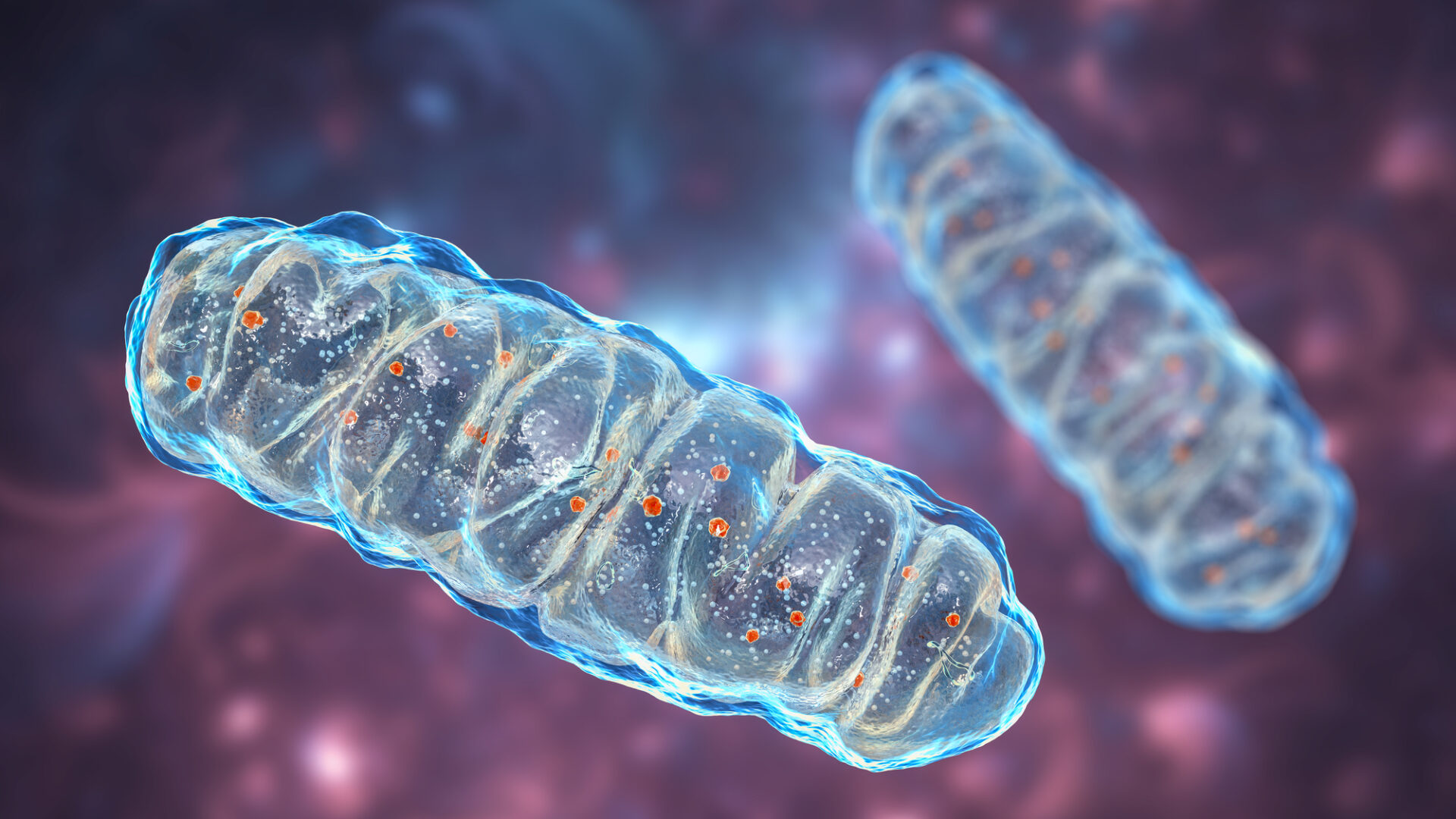
So, What Exactly Are Mitochondria?
Mitochondria are specialized structures, known as organelles, located within cells. Unlike most parts of a cell, they have two membranes and even contain a small amount of their own DNA.
Their most famous job is producing adenosine triphosphate, or ATP, the molecule cells use to store and transfer energy.
Think of ATP as your body’s cellular currency. Food provides the raw materials, oxygen helps unlock their energy, and mitochondria help convert that energy into a form your cells can actually spend.
Through a process called oxidative phosphorylation, mitochondria use electrons derived from carbohydrates and fats to create ATP. The process takes place along the inner mitochondrial membrane, where a sophisticated chain of proteins ultimately powers ATP production.
Cells with particularly demanding jobs tend to contain large numbers of mitochondria. Muscle, heart, liver, kidney and brain cells all require substantial amounts of energy and depend heavily on mitochondrial function.
More Than an Energy Factory
Energy production may get most of the attention, but mitochondria are increasingly understood to be active participants in many aspects of cellular health.
They help regulate calcium, communicate with other parts of the cell, influence immune responses and participate in the controlled removal of damaged cells. They also continually adapt to changing demands by joining together, dividing, and helping cells remove mitochondria that no longer function properly.
In other words, mitochondria are less like stationary batteries and more like a dynamic energy network constantly responding to what your body is doing.
That becomes especially interesting when we exercise.

Exercise Gives Your Mitochondria a Workout Too
When muscles repeatedly need more energy, they adapt. Part of that adaptation involves mitochondria.
Regular physical activity can stimulate changes in mitochondrial quantity, quality and efficiency, particularly within skeletal muscle. This helps explain why regular exercise can improve endurance and the body’s ability to use energy efficiently. Research continues to examine how aerobic exercise, resistance training and higher-intensity exercise affect mitochondrial function as we age.
For anyone interested in longevity, this may be one of the most practical lessons emerging from mitochondrial science: movement matters.
While mitochondrial characteristics can change with age, physical activity appears to influence how much of that change occurs.
What About Free Radicals?
Producing energy is not a perfectly clean process.
As mitochondria generate ATP, they can also produce molecules known as reactive oxygen species, or ROS. You may know them by the more familiar term “free radicals.”
For years, free radicals were portrayed simply as cellular villains. The reality is more nuanced. Small amounts of reactive oxygen species are part of normal biology and can actually act as important signalling molecules inside cells.
Problems can arise when production overwhelms the body’s antioxidant defences, creating what scientists call oxidative stress. Excess oxidative stress can damage proteins, DNA and cellular membranes, including components of mitochondria themselves.
The body therefore maintains its own network of antioxidant defences to help keep this system in balance.
Where Does CoQ10 Fit In?
One important player is coenzyme Q10, better known as CoQ10.
Your body naturally produces CoQ10, and it performs two particularly relevant jobs inside mitochondria. It participates in the electron transport chain that produces ATP, and in its reduced form, ubiquinol, it can act as an antioxidant.
CoQ10 is also available through foods and dietary supplements, making it a popular ingredient in products marketed for energy and mitochondrial support.
But marketing can sometimes move faster than the science.
CoQ10 unquestionably has an important biological role, but taking more of it does not automatically mean mitochondria will produce more energy. Research into supplementation remains mixed and depends heavily on the population being studied. A recent randomized trial in older adults, for example, found that supplementation substantially increased blood CoQ10 levels without improving the mitochondrial function measures studied.
For people with specific mitochondrial disorders or deficiencies, CoQ10 may have a different role and should be considered under medical supervision.
CoQ10 supplements are generally well tolerated, but they may interact with medications including warfarin and insulin, so it makes sense to speak with a healthcare professional before adding one to your routine.

How to Support Healthy Mitochondria
The most effective strategy may also be the least exotic.
Regular exercise remains one of the strongest lifestyle tools we have for stimulating mitochondrial adaptation. A nutrient-rich diet provides the proteins, fats, carbohydrates, vitamins and minerals needed for normal cellular metabolism. Maintaining metabolic health and staying physically active become increasingly important as we get older.
Interest is growing in supplements, specialized diets, and compounds designed specifically to target mitochondria. Some are scientifically intriguing, and research continues rapidly. But for otherwise healthy adults, no magic mitochondrial pill yet replaces the fundamentals of movement and good nutrition.
Small Structures, Big Impact
Mitochondria may be microscopic, but their influence reaches nearly every corner of the body.
Every walk, workout, heartbeat and thought depends on energy produced at the cellular level. As scientists learn more about mitochondria, it is becoming clear that these tiny powerhouses are involved not only in keeping us alive, but also in how our bodies adapt, recover, and age.
Perhaps the most encouraging part of mitochondrial science is that these structures are not static. They respond to demand.
Give your body reasons to produce and use energy through regular movement, nourishing food and an active lifestyle, and your mitochondria receive the message too.